Fleet and depot
List each vehicle’s return time, next departure, energy to replenish and any turnaround during the day. Compare managed overnight AC charging with DC charging for vehicles that need a faster return to service.

Fleet, workplace & public charging / Lower South Island
Which vehicles have to leave first, and how much energy do they need by then? That sets the brief for a depot. A public charging site also needs to work for an unfamiliar driver who has to pay, plug in and get help.
List each vehicle’s return time, next departure, energy to replenish and any turnaround during the day. Compare managed overnight AC charging with DC charging for vehicles that need a faster return to service.
Decide how many bays are needed now, who may charge and how each user’s energy will be reported or billed. Stage the common cabling and load controls so the next bays can be added without digging up the same car park.
Consider how long visitors stop, accessible bay layout, traffic flow, signage, driver payment, connectivity and support if a charger is unavailable. Agree the roles of site owner, charge-point operator, supplier and network before ordering equipment.
Worked example / illustrative only
Eight vans needing 30 kWh each require 240 kWh in total. Over a shared ten-hour parking window that averages 24 kW delivered to the vehicles, before losses. A van leaving after two hours changes the calculation.
Compare those windows with measured site demand, winter peaks, available supply and the network’s connection terms. The average alone cannot size a charger, switchboard or connection.
EECA’s commercial charging guidance (opens in a new tab)We start with the site layout, supply records, vehicle schedules and target opening date. Establish where specialist design, transformer or network works are needed and who owns those decisions before a firm installation price.
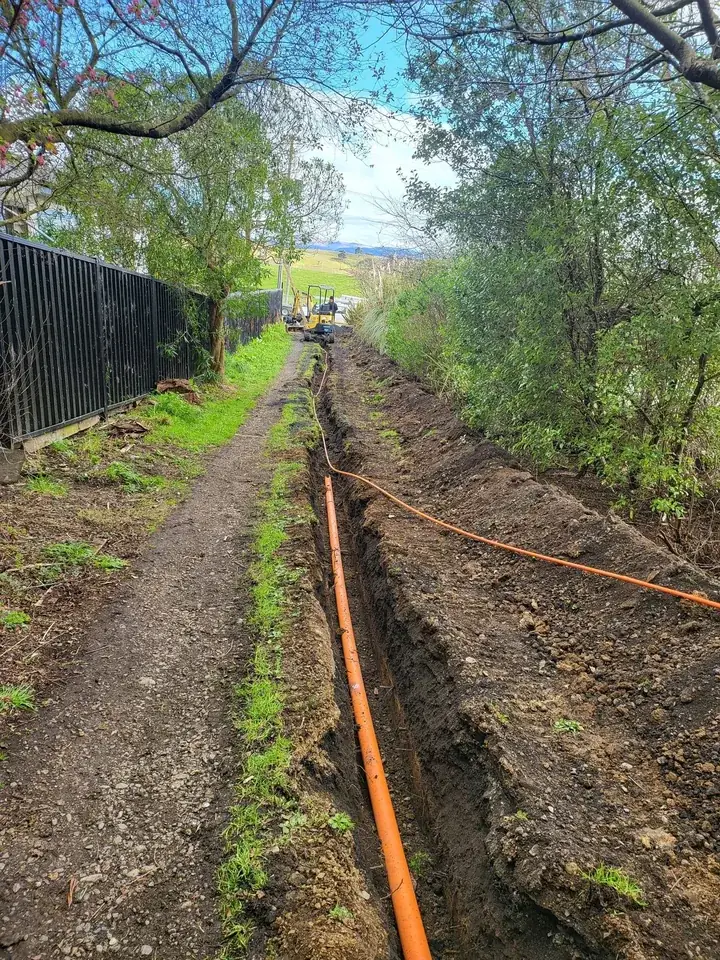
Separate trenching, ducts, reinstatement, switchboards, protection, cabling, metering and communications. Identify who handles excavation, traffic management, permissions and shutdowns. Price future bays separately.
Agree acceptance tests, load-sharing settings, operator access, software fees, driver support and fault escalation. Hand over the records and agree who can restore service if a charger or its connection goes offline.
Send the nearest town, vehicles or bays in the first stage, operating hours, existing supply details if known and the date pricing is needed.

Quality Assured member
Member 24728
94% in our September 2026 health and safety assessment.
What Gold means (opens in a new tab)Listed for Otago solar and battery installations.
See our SEANZ profile (opens in a new tab)Listed health and safety approved contractor.
Check the council register (opens in a new tab)