Workshop, retail or refrigeration
Tell us which loads run on a normal working day, which run overnight and what happens at weekends. Include planned chargers, refrigeration or machinery that could change demand.
Review business solar
Business & rural sites / Otago
If your plant runs through the day, there may be a good match between generation and demand. If most of the power goes on before sunrise, a large roof tells us very little. We’ll start with what the meter sees.
Discuss your site Send your farm or business power bill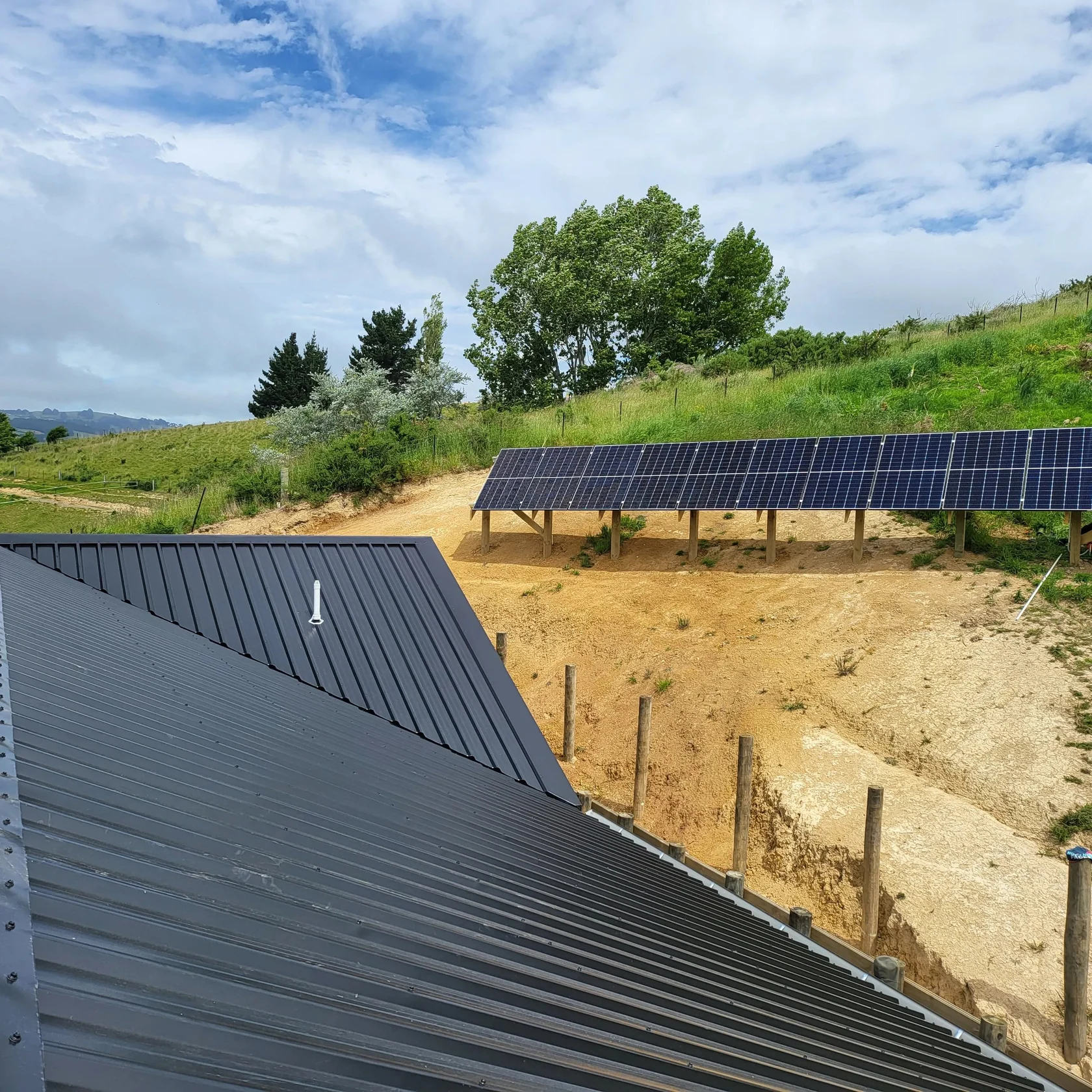
Site assessment
A recent bill and the operating hours are enough for a first conversation. If your retailer can supply half-hourly usage, it gives us a better basis for pricing.
Tell us which loads run on a normal working day, which run overnight and what happens at weekends. Include planned chargers, refrigeration or machinery that could change demand.
Review business solarMilking times, pumping, seasonal production and separate meters can all change the answer. Identify each supply and the equipment that needs to keep running in an outage.
Review rural solarSend the inverter model, array size if known and bills that show imports and exports. We can check whether storage, changes to load timing or leaving the system as it is makes the most sense.
Review an existing systemComparing the options
We compare an array on its own with a battery option where there’s a reason to store energy or provide backup. The proposal should show the electricity used on site, what is exported and the tariffs assumed. Generation and savings are estimates.
A battery for an afternoon peak is a different decision from backup for a pump during a cut. We identify the loads and run time, then look at the inverter, switchboard and any generator already on site. Roof condition, cable routes and network requirements can change the installed price.
Roof or ground
On a farm or workshop site, the sunnier patch may be away from the building. Compare shading, land use, cable distance, trenching, access for maintenance and protection from stock. Ground conditions and site-specific wind, snow and corrosion exposure affect the foundation and engineering allowance.
See how we assess a ground arrayBased in Dunedin
For Dunedin, Mosgiel, the Taieri and coastal Otago, send the site location and a bill. For a planned project in Queenstown, Wānaka or Southland, we review the brief first and confirm whether we can cover the work, travel and ongoing support.
Drawings, a site photo or the location of each meter are useful if you have them. We’ll tell you what we still need and whether a site visit is worth arranging.
Prepare a site enquiryBattery storage & backup
Compare storing surplus solar, backing up essential loads and managing site demand.

Quality Assured member
Member 24728
94% in our September 2026 health and safety assessment.
What Gold means (opens in a new tab)Listed for Otago solar and battery installations.
See our SEANZ profile (opens in a new tab)Listed health and safety approved contractor.
Check the council register (opens in a new tab)